
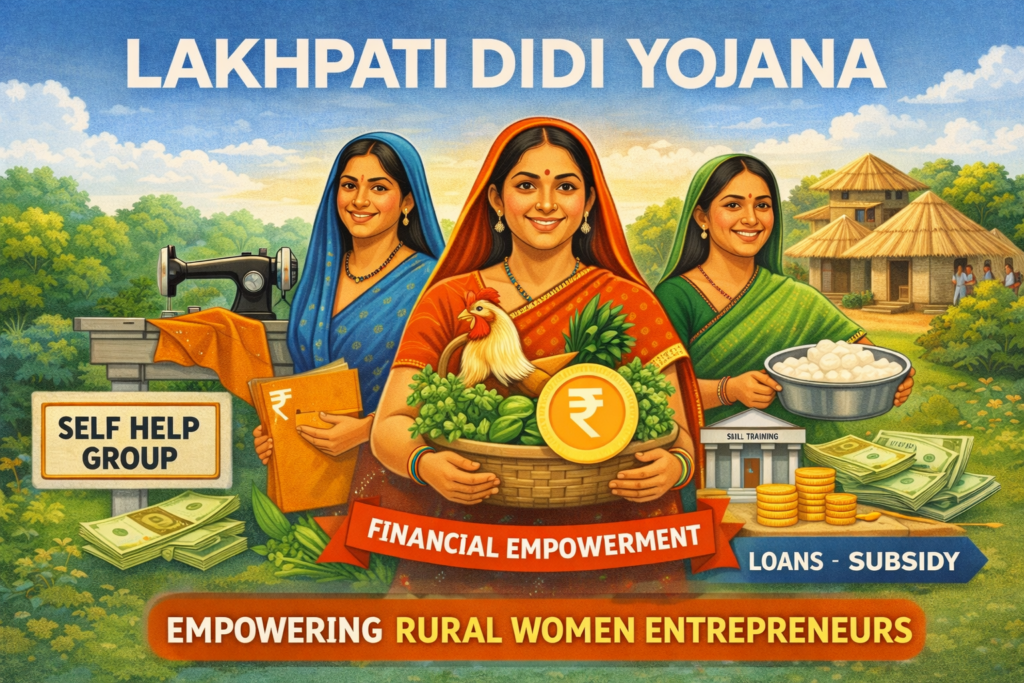
Women empowerment has become a key focus of India’s development agenda, and one scheme that is gaining massive attention nationwide is the Lakhpati Didi Yojana. This initiative aims to transform rural women into successful entrepreneurs by enabling them to earn ₹1 lakh or more annually through sustainable livelihood opportunities.
With growing emphasis on self-reliance, skill development, and financial independence, Lakhpati Didi Yojana has emerged as one of the most trending government schemes in India.
What is Lakhpati Didi Yojana?
Lakhpati Didi Yojana is a government-backed program designed to financially empower women associated with Self Help Groups (SHGs) in rural India. The objective is to help them achieve an annual income of at least ₹1 lakh through income-generating activities.
The scheme focuses on entrepreneurship, skill training, and access to financial support, making rural women economically self-reliant.
Why Lakhpati Didi Yojana is Trending in India
The popularity of Lakhpati Didi Yojana is increasing rapidly because:
- Focus on women-led development
- Income generation in rural areas
- Government support through SHGs
- Skill-based employment opportunities
- Alignment with “Vocal for Local” initiative
The scheme highlights India’s commitment to inclusive growth.
Objectives of Lakhpati Didi Yojana
The core objectives of Lakhpati Didi Yojana include:
- Creating women entrepreneurs in villages
- Increasing household income
- Promoting financial independence for women
- Strengthening Self Help Groups
- Encouraging sustainable livelihoods
Key Features of Lakhpati Didi Yojana
1. Annual Income Target of ₹1 Lakh
The scheme aims to help women SHG members earn ₹1 lakh or more per year through small businesses and self-employment.
2. Skill Development Training
Beneficiaries receive training in areas like agriculture, dairy, tailoring, handicrafts, food processing, and local enterprises.
3. Financial Assistance & Credit Support
Women get access to loans, subsidies, and financial assistance through SHGs and banks.
4. Market Linkage Support
The scheme helps women sell their products in local and national markets.
Eligibility Criteria for Lakhpati Didi Yojana
To benefit from Lakhpati Didi Yojana, applicants must:
- Be an Indian citizen
- Be a woman member of a Self Help Group
- Belong to a rural household
- Be involved in income-generating activities
How to Apply for Lakhpati Didi Yojana
The application process is simple and offline/online depending on state implementation:
- Join a registered Self Help Group
- Contact local SHG coordinator or Panchayat office
- Submit required documents
- Attend skill development training
- Start income-generating activities
Benefits of Lakhpati Didi Yojana
- Financial independence for rural women
- Increased household income
- Employment generation at village level
- Improved standard of living
- Social and economic empowerment
Impact of Lakhpati Didi Yojana on Rural India
The scheme is playing a vital role in:
- Reducing poverty among rural families
- Encouraging women-led entrepreneurship
- Strengthening rural economy
- Promoting inclusive growth
Thousands of women have already become Lakhpati Didis, inspiring others across villages.
Challenges and Government Support
Some challenges include limited market access and skill gaps. To address this, the government provides:
- Continuous training programs
- Financial inclusion support
- Market linkage initiatives
- Digital tools for business growth
Future Scope of Lakhpati Didi Yojana
The future of Lakhpati Didi Yojana is highly promising as it aligns with India’s vision of women-led development. The government plans to expand coverage and strengthen support systems for SHG women entrepreneurs.
Lakhpati Didi Yojana is not just a welfare scheme it is a powerful movement toward women empowerment and rural prosperity. By enabling women to earn sustainable incomes, the scheme is transforming lives and strengthening India’s grassroots economy.
If you want a government initiative that truly empowers women and promotes self-reliance, Lakhpati Didi Yojana stands out as a game-changing program.
Frequently Asked Questions (FAQs)
1. What is Lakhpati Didi Yojana?
Lakhpati Didi Yojana is a government initiative aimed at empowering rural women by helping them earn an annual income of ₹1 lakh or more through self-employment and entrepreneurship.
2. Who is eligible for Lakhpati Didi Yojana?
Any rural woman who is a member of a Self Help Group (SHG) and actively engaged in income-generating activities is eligible for Lakhpati Didi Yojana.
3. What is the main objective of Lakhpati Didi Yojana?
The primary objective of Lakhpati Didi Yojana is to promote financial independence, women entrepreneurship, and sustainable livelihoods in rural India.
4. How much income is targeted under Lakhpati Didi Yojana?
The scheme aims to help women earn a minimum annual income of ₹1 lakh, making them economically self-reliant.
5. What type of work is supported under Lakhpati Didi Yojana?
Lakhpati Didi Yojana supports activities like agriculture, dairy farming, tailoring, handicrafts, food processing, livestock rearing, and small rural businesses.
6. Is any financial assistance provided under Lakhpati Didi Yojana?
Yes, beneficiaries receive access to credit, low-interest loans, subsidies, and financial support through Self Help Groups and banks.
7. How can women apply for Lakhpati Didi Yojana?
Women can apply through their Self Help Group, Panchayat office, or rural development department in their area. The application process varies by state.
8. Is Lakhpati Didi Yojana available in all states of India?
Yes, Lakhpati Didi Yojana is being implemented across multiple states in India under national and state rural development programs.
9. What training is provided under Lakhpati Didi Yojana?
Beneficiaries receive skill development training, business guidance, and market linkage support to ensure sustainable income generation.
10. Why is Lakhpati Didi Yojana important for rural women?
Lakhpati Didi Yojana plays a crucial role in empowering rural women, reducing poverty, promoting entrepreneurship, and strengthening the rural economy.